1934 Rolls-Royce 20/25

no reserve
24 Bids 38 Following Highest bidder - dzaha
Ends 1:30 PM, 17 Dec 2025
Current Bid

£7,400

no reserve
dzaha

Paul's review

Paul Hegarty - Consignment Specialist Message Paul

“ We’ve seen quite a few 20/25s here at HQ, but we can’t recall ever encountering a Cockshoot-bodied specimen before. ”

An interesting winter project from a premier coachbuilder which should be straightforward and rewarding to recommission.

Background

The 20/25 was the second of Rolls-Royce’s pre-war entry level models, and had considerably more get up and go than its predecessor, the 20, thanks to a bigger, more powerful, 3.7-litre engine. 

Built between 1929 and 1936, the 20/25 was tremendously popular, becoming the biggest selling of the inter-war cars built by the world-famous Crewe-based company. 

Its success enabled Rolls-Royce to survive the economic difficulties of the Great Depression years and remain one of world's great brands. 

A total of 3,827 20/25s were produced, of which a staggering 70% are still on the road today. 

An Autocar report in 1931 describes the 20/25 thus: 'Every single feature spells durability, the machine is on a plane altogether superior to the normal style of motor car'

All 20/25s were outfitted with custom bodies from legendary coachbuilders such as Park Ward, Vanden Plas, Hooper, Freestone and Webb, Brewster, Gurney Nutting, Thrupp & Maberly, Mulliner, Rippon Bros, Windovers, and Cockshoot. 

The engine was a 3699cc straight-six with overhead pushrod operated valves, featuring a cast-iron block with an aluminium crankcase. A single cast iron cylinder head sat atop the assembly with a single spark plug per cylinder. 

The typically British long stroke design also incorporated a seven main bearing crankshaft with a vibration damper and pressure fed lubrication, with a relief valve feeding the rocker shaft and timing gears. All of which was really very advanced for the time.

Mated to this was a four-speed manual gearbox with synchromesh on third and fourth gears, and a single plate dry clutch. These features, plus servo-assisted brakes on all four wheels, ensured that Rolls-Royce were pretty much leading the way in the development and application of new technology. 

In 1932 shock absorbers and a thermostat-controlled cooling system were introduced. The thermostats operated the radiator air-flow automatically, eliminating the need for the driver to open and close the radiator shutters by hand. 

In 1936 the 20/25 was superseded by the 25/30.

Key Facts

  • Coach Built Body
  • Nice History File
  • Comes with rear bumper/wing & seat
  • Ex Museum Display Car
  • Older Restoration
  • GRF25
  • 78000 miles
  • 3669cc
  • manual
  • Black/Yellow
  • Brown Leather
  • Right-hand drive
  • Petrol
Vehicle location
THE MARKET HQ, United Kingdom

Background

The 20/25 was the second of Rolls-Royce’s pre-war entry level models, and had considerably more get up and go than its predecessor, the 20, thanks to a bigger, more powerful, 3.7-litre engine. 

Built between 1929 and 1936, the 20/25 was tremendously popular, becoming the biggest selling of the inter-war cars built by the world-famous Crewe-based company. 

Its success enabled Rolls-Royce to survive the economic difficulties of the Great Depression years and remain one of world's great brands. 

A total of 3,827 20/25s were produced, of which a staggering 70% are still on the road today. 

An Autocar report in 1931 describes the 20/25 thus: 'Every single feature spells durability, the machine is on a plane altogether superior to the normal style of motor car'

All 20/25s were outfitted with custom bodies from legendary coachbuilders such as Park Ward, Vanden Plas, Hooper, Freestone and Webb, Brewster, Gurney Nutting, Thrupp & Maberly, Mulliner, Rippon Bros, Windovers, and Cockshoot. 

The engine was a 3699cc straight-six with overhead pushrod operated valves, featuring a cast-iron block with an aluminium crankcase. A single cast iron cylinder head sat atop the assembly with a single spark plug per cylinder. 

The typically British long stroke design also incorporated a seven main bearing crankshaft with a vibration damper and pressure fed lubrication, with a relief valve feeding the rocker shaft and timing gears. All of which was really very advanced for the time.

Mated to this was a four-speed manual gearbox with synchromesh on third and fourth gears, and a single plate dry clutch. These features, plus servo-assisted brakes on all four wheels, ensured that Rolls-Royce were pretty much leading the way in the development and application of new technology. 

In 1932 shock absorbers and a thermostat-controlled cooling system were introduced. The thermostats operated the radiator air-flow automatically, eliminating the need for the driver to open and close the radiator shutters by hand. 

In 1936 the 20/25 was superseded by the 25/30.

Video

Overview

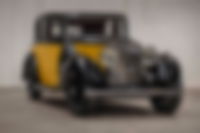
This rare car was bodied as a Sports Saloon by the esteemed Manchester coachbuilders Joseph Cockshoot & Co, a firm noted for the very high quality of its work.

It was delivered new to a gentleman in Oldham in 1935 and, in 1959, it was owned by a man whose postal address was the intriguing ‘Weir Common Room, University College, Oxford.’ 

At some point it crossed the Atlantic. We know it was in New York State in 1961.

We also know that it was at one time part of a motor museum in the US. 

In 2010 it underwent a significant restoration in the US, carried out, we’re told, by a ‘highly experienced British auto engineer’. 

As well as the bodywork and interior, the restoration included the engine, drivetrain and mechanicals.

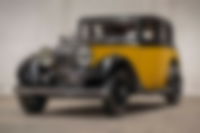
At some point, possibly during the US restoration, it changed colour from its original silver to the black over yellow you see today. 

It seems logical to assume that it would have acquired the nickname of ‘Buttercup’ at roughly the same time.

The vendor is selling this car as part of a collection owned by his late brother. 

It has been running in the not too distant past but has been idle in storage for some time now and is, consequently, a project in need recommissioning.

We can confirm that the engine does turn over by hand.

Aside from some fairly obvious damage to the nearside rear corner of the car, it is actually in really very decent overall condition and would, we think, make an excellent winter project for someone with the right levels of enthusiasm and knowledge. 

Exterior

The Cockshoot ‘Sports Saloon’ body sits atop a Rolls-Royce 20/25 ‘long type’ chassis.

It’s a combination that helps the car presently very well, in our opinion, and we think it achieves an aesthetically pleasing balance of (relatively) compact proportions and stylish lines. 

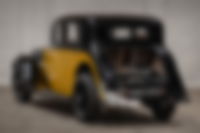
The nearside rear corner of the car has taken a bash and will need some professional expertise to get it back to its former glory. The boot lid is detached (but present), for obvious reasons.

Aside from that, though, the bodywork is pretty much free of any dinks, dents, creases or other aberrations of real significance or consequence.

The running boards are solid and sound, and the doors close with plenty of coach-built heft and authority.

Even the paintwork has done a reasonable job of retaining much of its shine and lustre, with not much more than a pretty standard number and distribution of scuffs, scratches and stone chips around the car in the usual places.

The brightwork is shiny and free of any noticeable foxing, pitting or tarnishing.

The lights, lenses badging and other exterior fixtures and fittings are all good, too, and there’s impressive attention to detail in features such as the driver’s side wing mirror mounted on top of the spare wheel with leather straps.

The black wire wheels are in good order. We imagine the tyres are decidedly long in the tooth.

Interior

There’s more soft brown hide in here than you’d find at a rodeo, and most of it is in very good condition.

Buttery and supple, the brown leather upholstery has yet to earn more than the odd light crease, let alone any ingrained patina.

There is a length of detached trim on the front passenger seat.

The rear seat backs are not fixed in place at the moment and there’s nothing between them and the interior of the boot. It looks like a job that might have been paused at some point and never restarted. 

The leather on the door cards is also very good, although possibly very slightly baggy here and there.

The carpeted sections at the base of the door cards and the rearward bases of the front seats are a tad scruffy in places, but are broadly pretty decent.

Elsewhere, the brown carpets have stood up well, and the headlining and wooden inserts are decent, save for a couple of faint marks to the former and the odd scratch or two on the latter.

The steering wheel, gear lever and other controls all appear to be in order but, as we haven’t started or driven the car, we can’t vouch for their behaviour or efficacy.

Mechanical

The engine and engine bay are reassuringly clean and dry, and everything appears to be in its right and proper place, as far as we can see.

The car’s chassis and underpinnings look to have plenty of structural integrity, and we’ve seen absolutely nothing to make doubt the car’s solidity or soundness.

History

The car comes with all sorts of copies of original build and specification sheets, plus a photographic record of the restoration accompanied by a record of the work carried out and at what cost. 

More up-to-date history is rather thinner on the ground, largely because the car has been leading a very quiet life in recent years.

Summary

We’ve seen quite a few 20/25s here at HQ, but we can’t recall ever encountering a Cockshoot-bodied specimen before.

This is a rare car and, while it will require work to sort out some obvious issues, much of the restoration and refurbishment heavy lifting was done by other people (so you don’t have to) around 15 years ago.

We think it has the makings of a very fine car indeed and fully expect its next owner to enjoy many happy years of pedigree motoring. 

We’re confident to offer this car for auction with an estimate of £10,000 - £15,000.

Viewing is strongly encouraged, and this lot is located at THE MARKET, HQ. Viewings are STRICTLY BY APPOINTMENT and we are open weekdays between 10am - 12pm or 2pm - 4pm. To make a booking, please use the ‘Enquire About This Vehicle’ button on the listing. Feel free to ask any questions, or try our ‘Frequently Asked Questions’.

About this auction

Estimated value

£10,000 - £15,000

Seller

Private: deltra
Buyer's Premium
7% of the winning bid (minimum £700), plus 20% VAT on the Premium only.


Viewings Welcome

Viewing is strongly encouraged, and is strictly by appointment. To book one in the diary, please get in contact.

e8a06017-8c39-4112-8266-0803f455cc97/b2688503-b306-4e0b-88a1-3b68cf4a8853.jpg?optimizer=image&width=650 image

Thinking of selling your Rolls-Royce