



Background
THIS AUCTION HAS BUYERS FEES OF 7% + VAT ON TOP OF THE 'HAMMER'. OUR NEW 'NO BUYERS FEES' MODEL WILL ROLL-OUT IN 2026.
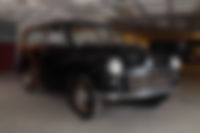
One of the most instantly recognisable vehicles on the road, the Morris Minor is pungently redolent of all things archaically British – cucumber sandwiches, duffle coats, tea strainers, buck-toothed vicars, and fierce aunts scented with tweed, feathers and smelling salts.
Backed-up by countless spare parts providers and simple enough to be repaired at the roadside by anyone with a spanner, the Morris Minor is a deservedly popular choice among classic car enthusiasts who are perhaps not quite ready for a Lamborghini Miura.
The earliest iteration of Sir Alec Issigonis’ Morris Minor, the Series MM type, was produced from late 1948 until early 1953.
In 1952, the Minor was mechanically re-engineered as the Series II following the merger of the Nuffield Organization with the Austin Motor Company to form the British Motor Corporation.
Designed, like the original 1948 Minor saloon, by Alec Issigonis, the highly practical Traveller, with its folding back seat and rear doors that could be left open for carrying long loads, was one of the last cars to use a structural wood frame.
Launched in 1953, it was deliberately distinguished from the Minor van by being given quality features such as stainless-steel door window frames on the longer doors of the two-door saloon – the van using short doors shared with the four-door.
It also used the two-door saloon platform rather than the chassis-cab layout of the pick-up and van. The steel roof stopped at the back of the doors, where it was joined to an aluminium rear roof mounted on the structural wood frame, which was bolted to the floorplan and B-posts – inset panels were aluminium too, though the rear wings were still steel.
A particularly clever feature – typical of Issigonis – was that the spare wheel and tools were stored in a separate compartment under the boot floor, revealed on opening the rear doors – so there was no need to disturb luggage in order to change a wheel.
