1972 MG Midget 'Special'

20 Following
Click Follow for updates

Auction starts in 4 days

Mark's review

Mark Livesey - Consignment Specialist Message Mark

“ Undoubtedly a very quick car, this 1972 Midget has had a professional RWA conversion, built up as a race car by Nick Aveyard and his co-driver Robert Sinclair of Wakefield but never raced. ”

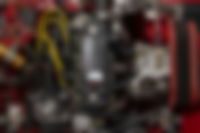
The engine is a 1380cc A series fitted with ARP rods, Omega pistons and competition bearings, with a full roll cage, Maniflow inlet and exhaust system, adjustable shocks, a VP8 camshaft, electronic extinguisher system, and all lightweight ancillaries.

Background

The MG Midget was a notably small car even when new in 1961.

There’s a clue in the rather less than PC name.

But if you saw one today, perhaps parked between a Range Rover and a Kia EV9, you’d be forgiven for thinking that a small child had lost a Dinky toy.

They really don’t make them like this anymore.

And that’s a shame, because the MG Midget is a fabulously fun and rewarding car to drive, offering analogue thrills and seat-of-your-pants feedback that will far exceed your expectations given the car’s modest power and lack of sophistication.

Announced at the end of June 1961, the first version of the Midget was, to all intents and purposes, a slightly more expensive badge-engineered version of the MkII Austin-Healey Sprite deluxe version.

The Midget differed from the Sprite only in grille design, badging, improved interior trim, better instruments and additional external polished trim to justify its higher price.

Mechanically the car was identical to its Austin-Healey counterpart, with a 948 cc A-Series engine with twin SU carburettors producing 46 hp at 5500 rpm.

A hard top, heater, radio and luggage rack were available as factory-fitted extras.

A MkII arrived three years later in ’64, with capacity hiked to 1098cc and power to a lofty 59bhp – oh, and you got a set of disc brakes up front.

The size of the engine rose over the years, of course, first to 1098c and 56bhp, which meant that front disc brakes were now the order of the day. The MkII Midget of 1964 brought a further small increase to 59bhp, which meant semi-elliptic rear suspension was fitted to replace the original harsh cart springs.

1966 saw the (detuned) 1275cc engine from the Mini Cooper S being used, which gave the driver a heady 65bhp to play with, and a 1493cc engine found its way under the bonnet from 1974 onwards.

The MG Midget continues to punch above its (modest) weight even today thanks to direct steering, a surprisingly compliant suspension, and some of the best retail and garage support in the classic car business.

They are stalwarts of the classic car scene and are frequently tweaked and breathed-upon to get them into the sort of shape required for competitive track use, sprints and hill climbs.

We have a fabulous example of just such a car here with us today.

Key Facts

  • New Battery Fitted
  • W&P Sebring MK2 Hard-Top
  • Ashley Bonnet
  • 1380cc Engine
  • GAN5-121609G
  • 18,000 Miles
  • 1380cc
  • manual
  • Red
  • Black Vinyl
  • Right-hand drive
  • Petrol
Vehicle location
THE MARKET HQ, United Kingdom

Background

The MG Midget was a notably small car even when new in 1961.

There’s a clue in the rather less than PC name.

But if you saw one today, perhaps parked between a Range Rover and a Kia EV9, you’d be forgiven for thinking that a small child had lost a Dinky toy.

They really don’t make them like this anymore.

And that’s a shame, because the MG Midget is a fabulously fun and rewarding car to drive, offering analogue thrills and seat-of-your-pants feedback that will far exceed your expectations given the car’s modest power and lack of sophistication.

Announced at the end of June 1961, the first version of the Midget was, to all intents and purposes, a slightly more expensive badge-engineered version of the MkII Austin-Healey Sprite deluxe version.

The Midget differed from the Sprite only in grille design, badging, improved interior trim, better instruments and additional external polished trim to justify its higher price.

Mechanically the car was identical to its Austin-Healey counterpart, with a 948 cc A-Series engine with twin SU carburettors producing 46 hp at 5500 rpm.

A hard top, heater, radio and luggage rack were available as factory-fitted extras.

A MkII arrived three years later in ’64, with capacity hiked to 1098cc and power to a lofty 59bhp – oh, and you got a set of disc brakes up front.

The size of the engine rose over the years, of course, first to 1098c and 56bhp, which meant that front disc brakes were now the order of the day. The MkII Midget of 1964 brought a further small increase to 59bhp, which meant semi-elliptic rear suspension was fitted to replace the original harsh cart springs.

1966 saw the (detuned) 1275cc engine from the Mini Cooper S being used, which gave the driver a heady 65bhp to play with, and a 1493cc engine found its way under the bonnet from 1974 onwards.

The MG Midget continues to punch above its (modest) weight even today thanks to direct steering, a surprisingly compliant suspension, and some of the best retail and garage support in the classic car business.

They are stalwarts of the classic car scene and are frequently tweaked and breathed-upon to get them into the sort of shape required for competitive track use, sprints and hill climbs.

We have a fabulous example of just such a car here with us today.

Video

Overview

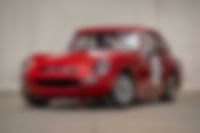
This very purposeful, focussed and capable Midget was developed to be a competitive race car for ‘Swinging 60s’ and other series and events by experienced Midget aficionado and driver Nick Aveyard and his co-driver Robert Sinclair.

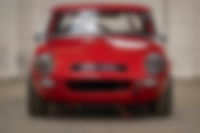
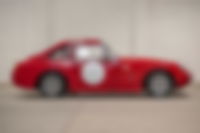
The heavily modified Midget features a professional RWA conversion, Ashley bonnet, W&P Sebring Mk2 fastback hardtop, lowered suspension, adjustable shocks, a Maniflow inlet and exhaust system, a full roll-cage, dual circuit brakes, high-torque starter motor, and various other track mods including full safety provision in accordance with MSA regulations.  

The engine is a 1380cc ‘A’ series unit that’s been reworked by MED Engineering with ARP rods, Omega pistons, competition bearings, a VP8 camshaft, 7.5” flywheel, oil cooler, and lightweight ancillaries throughout.

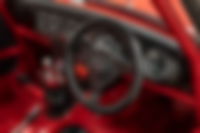
The interior is totally stripped save for the driver's seat and harness, and features fully electronic extinguisher and (mapable) ignition systems.

It is absolutely built to the hilt and is raring to go – largely because it’s never been raced.

It has, however, proved its rapidity (and reliability) at the Harewood hill climb and a couple of sprints, but it has yet to turn a wheel on a track.

Exterior

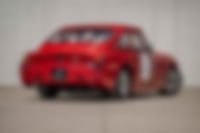
The vehicle presents very well from every angle and looks pretty much minty fresh and squeaky clean in every respect, as befits a car that’s been optimally prepared and readied for serious track use but has yet to actually do any.

The bodywork is straight and true, and the panel gaps and shut-lines accord with what you would hope and expect to find.

The striking red paintwork is shiny and lustrous and the car’s various decals and stickers are as yet untroubled either by use or the passage of time.

All four 13” KN Minator wheels are very decent, save for a few scuffs, and they are shod in matching Yokohama road legal tyres, all of which look to have plenty of useful life and service left in them. There are a set of Yokohama track tyres that come with the car. 

The plastic headlamp cowls are currently being helped to stay in place by some red adhesive tape.

There is some rather ragged looking mastic (or similar) at the forward ends of the rubber trim beneath the side windows.

There are some cracks to the composite and gel-coat around the bonnet hinge on the nearside and, to a lesser extent, on its offside counterpart.

All lights, lenses, badging and other exterior fixtures and fittings look to be in very good overall condition.

Interior

There’s rarely much to say about the inside of a race-prepped, track-focused, safety regulations-compliant car, and this one is no exception.

The principal take-out from looking at the interior is undoubtedly the newness of everything you can see.

The car hasn’t been used in anger and it looks like it: everything is unmarked and there are no signs of wear, tear, age or misuse anywhere that we can see.

As far as we are aware, all controls, dials, switches, levers, buttons, gauges and knobs do precisely what’s asked of them in a timely and faithful manner.

Mechanical

The engine and engine bay look exceptionally clean, tidy and ordered.

We’d give it 5 stars on a food hygiene rating, never mind a mechanic’s report, and everything appears to be in its right and proper place.

The undersides look as virtually brand-new as the rest of the car and are clearly possessed of a great deal of structural integrity.

We’ve seen absolutely nothing to make us doubt the car’s honesty or character.

The seller has recently fitted a larger, more powerful battery, and it now roars into life with great willingness.

History

The car comes with a recent, clear HPI report, a V5C, and a healthy wad of invoices, bills and receipts attesting to work carried out over the last few years.

Summary

Raw, visceral, analogue motorsport fun doesn’t come much better than a properly sorted and fettled Midget.

In this instance, other people – people who really know what they’re doing and haven’t been afraid to spend some big money – have done all the heavy lifting for you.

All you have to do is enjoy driving it to the best of your, and its, no doubt impressive abilities.

We are happy to offer this car for auction with an estimate in the range of £10,000 - £15,000.

Viewing is strongly encouraged, and this lot is located at THE MARKET HQ. Viewings are STRICTLY BY APPOINTMENT and we are open weekdays between 10am - 12pm or 2pm - 4pm. To make a booking, please use the ‘Enquire About This Vehicle’ button on the listing. Feel free to ask any questions, or try our ‘Frequently Asked Questions’.

About this auction

Estimated value

£10,000 - £15,000

Seller

Private: X4BED
Deposit
7% of the winning bid (minimum £700, maximum £7,000), plus 20% VAT on the Deposit only.


Viewings Welcome

Viewing is strongly encouraged, and is strictly by appointment. To book one in the diary, please get in contact.

f4f78fbd-2502-40b4-a93c-5e440775ff1a/727db52e-f684-4666-a9fe-5a0a26f43521.jpg?optimizer=image&width=650 image

Thinking of selling your MG