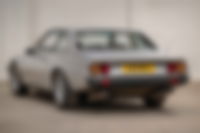
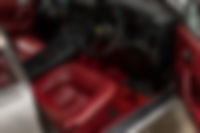
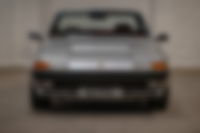
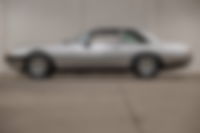

Background
Ferrari’s '400' series of fast, luxurious four-seaters had begun with the introduction of the 365 GT/4 2+2 in 1972. The GT/4 was the first four-seat Ferrari to enjoy the benefits of the quad-cam V12 engine, as signified by the '/4' suffix.
The new 2+2 was based on the short-lived 365 GTC/4, using a similar chassis and a wet-sump version of the 4,390cc Daytona engine coupled to a conventional five-speed gearbox rather than the Daytona's transaxle.
Launched at the 1976 Paris Salon, the 400GT had acquired a 4.8-litre version of Ferrari's quad-cam V12 engine but otherwise differed from its 365GT/4 2+2 predecessor only in detail.
The 400GT re-affirmed Ferrari's determination to compete with the world's finest luxury sports saloons and was intended to attract the type of mature yet discerning customer who previously might have opted for a Bentley or Mercedes-Benz.
This latter requirement made the option of automatic transmission a necessity. The unit chosen - General Motors' three-speed Hydramatic - was widely regarded as the world's best, having been used by Cadillac and subsequently by Rolls-Royce and Jaguar among others.
Ferrari's splendidly equipped 2+2 featured self-levelling independent rear suspension, power-assisted steering, electric windows and optional air conditioning.
Sadly, even after it received fuel injection, the 400GT - now the 400i GT - remained effectively a Europe-only model because of the expense involved in crash-testing two cars for US safety assessment.
By the time production of the final 412 version ceased in 1989, Ferrari's finest 2+2 had been in production for a remarkable 17 years, though its exclusivity meant that there were seldom more than 200 sold in any one year.