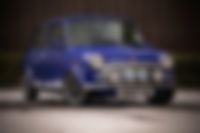
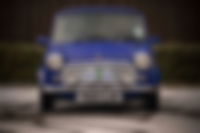
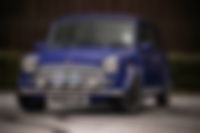

1998 Mini Paul Smith

20 Bids Winner - JATS
1:03 PM, 21 Jan 2026Vehicle sold
Sold for

£14,000

Winner - JATS

Fraser's review

Fraser Jackson - Consignment Specialist Message Fraser

“ A wonderful limited edition mini that was featured on the cover of Mini World magazine. ”

One of only 300 special cars built.

Background

One of very few genuinely ground-breaking cars, the Alec Issigonis-designed Mini is rightly praised for its innovative engineering, handsome looks, surprisingly spacious interior and giant-killing handling.

In provided transport for millions of families who might not otherwise have been able to afford to run a modern car, and in competition it slew all who were daft enough to compete against it. It won praise from private owners, professional rally drivers, vanquished competitors, pundits and spectators, all of whom keep it close to their heart, even more than sixty years after it first came into being.

Introduced in 1959 as cheap, stripped-to-the-bones family transport to beat the oil crisis, it started life with an 850cc engine fitted transversely and above the gearbox. Front-wheel-drive, the Mini’s original rubber cone suspension freed up yet more interior space – and endowed the diminutive British car with unholy roadholding and handling. 

And this was the real reason for the Mini’s success at the hands of folk like Paddy Hopkirk: most corners could be taken completely flat, something generations of learner drivers discovered to their glee…

Originally marketed as the Austin Seven and Morris Mini Minor like the one you see here, it was given the Mini moniker in 1969. It evolved in true Darwinian fashion over the years mechanically too, gaining engine capacity and performance at an almost exponential rate. 

It lost its rubber cone suspension in 1964 in favour of a very clever Hydrolastic arrangement; this change improved the ride a little – the somewhat bouncy ride had been one of the original car’s few weak points - while retaining its prodigious grip.

However, no matter what engine was fitted, whether the original 850cc unit or the later 1275cc, the power and torque outputs were always relatively – and deliberately – modest. But then the engine only had only to haul 686kgs, which means that the Mini is surprisingly quick, both in acceleration and braking. Cheap to run too, whether in fuel, insurance, or maintenance and repair.

Key Facts

  • 1 Former Keeper
  • Featured On The Cover Of Mini World
  • One Of Only 300 UK Cars
  • SAXXNWAZEWD157322
  • 25,646 Miles
  • 1275cc
  • manual
  • Paul Smith Blue
  • Black Leather
  • Right-hand drive
  • Petrol
Vehicle location
THE MARKET HQ, United Kingdom

Background

One of very few genuinely ground-breaking cars, the Alec Issigonis-designed Mini is rightly praised for its innovative engineering, handsome looks, surprisingly spacious interior and giant-killing handling.

In provided transport for millions of families who might not otherwise have been able to afford to run a modern car, and in competition it slew all who were daft enough to compete against it. It won praise from private owners, professional rally drivers, vanquished competitors, pundits and spectators, all of whom keep it close to their heart, even more than sixty years after it first came into being.

Introduced in 1959 as cheap, stripped-to-the-bones family transport to beat the oil crisis, it started life with an 850cc engine fitted transversely and above the gearbox. Front-wheel-drive, the Mini’s original rubber cone suspension freed up yet more interior space – and endowed the diminutive British car with unholy roadholding and handling. 

And this was the real reason for the Mini’s success at the hands of folk like Paddy Hopkirk: most corners could be taken completely flat, something generations of learner drivers discovered to their glee…

Originally marketed as the Austin Seven and Morris Mini Minor like the one you see here, it was given the Mini moniker in 1969. It evolved in true Darwinian fashion over the years mechanically too, gaining engine capacity and performance at an almost exponential rate. 

It lost its rubber cone suspension in 1964 in favour of a very clever Hydrolastic arrangement; this change improved the ride a little – the somewhat bouncy ride had been one of the original car’s few weak points - while retaining its prodigious grip.

However, no matter what engine was fitted, whether the original 850cc unit or the later 1275cc, the power and torque outputs were always relatively – and deliberately – modest. But then the engine only had only to haul 686kgs, which means that the Mini is surprisingly quick, both in acceleration and braking. Cheap to run too, whether in fuel, insurance, or maintenance and repair.

Video

Overview

‘R616 HJW’ is a Paul Smith limited edition Mini from 1998. Stuffed to the gunnels with signature features including hidden flashes of Citrus Green in the boot, engine bay, and glovebox, the coachwork is finished in Paul Smith Blue, including the colour-matched wheelarch extensions and door mirrors.

Paul Smith Blue was the only colour offered here in the United Kingdom, although the Japanese could also order it in Old English White or Black. All could enjoy the leather-trimmed steering wheel and plaque inside the glovebox that was bolstered by a Certificate of Authenticity.

Of the 1,800 that were made, 1,500 went to Japan with just 300 allocated for the domestic market. This is one of those cars, a genuine UK-market example that’s powered by the iconic 1275cc A-Series engine underneath the gold and enamel bonnet badge.

The seller’s neighbour bought this one as a nearly-new car from Rover, and when he was forced to give up driving in his nineties, he offered to help sell one of the rarest and most desirable Minis of its generation. 

With just 25,000 miles on the odometer and boasting one of the most comprehensive service histories we’ve ever seen, it’s a stunning example of an increasingly rare fashion icon. 

Exterior

The Paul Smith Blue coachwork (who wouldn’t want to have a colour named after them?) looks terrific, doesn’t it? Subtle and yet distinctive, it sets the tone, whispering to interested passers-by that they’re in the presence of something unusual.

Unusually well-preserved too, thanks to what can only be described as meticulous curation over the past quarter-of-a-century and 25,000 miles, a pleasing symmetry that equates to no more than a thousand miles a year.

No wonder then that it presents so well, with factory-perfect shutlines still and a wonderful stance thanks to those black and silver Minilite-style alloy wheels.

The details stack up too, including the (presumably expensive) Paul Smith bonnet badge that seems to have been something of a must-steal item among a certain segment of the population; it’s certainly better crafted than anything that rolled out of Wolfsburg but then the Germans weren’t daft enough to craft a badge out of gold and enamel, either. 

There’s a Citrus Green UK badge on the radiator grille too, plus a Paul Smith sticker in the rear window. The chromework is all very good too, needing little more than a polish with some Autosol to keep it nice and sparkly.

Of course, being a Mini it needs spotlights too, and the quadruple set-up this one boasts adds style and functionality in equal measure. Plus, say what you like about the efficiency of an LED light bar, you can’t beat a set of Old School halogen lamps for style, can you? 

They, like all the lamp lenses, are in great shape too with no cracks, chips, or other damage.

The diminutive alloy wheels are fitted three Falken tyres and one Pirelli. 

As for work to do, the rear numberplate is too big, the offside rear wheelarch is scuffed, and the alloy wheels would benefit from being refurbished – and you might as well pop a set of new and matching tyres on while you’re at it as the Falkens are getting on a bit.

More urgent is the rust that’s broken out around both headlamps. There’s a smaller amount on the nearside front wing too, as well as a smattering along the nearside sill.

Interior

The interior is meticulously judged, blending the iconic Mini design with a few subtle flashes whose sum adds up to something greater than its parts: It’s almost as if Rover employed the services of one of the best British designers of their generation. 

His flourishes include a Citrus Green lining to the glovebox and boot, plus a Paul Smith Blue dashboard, ivory instruments, and a plaque inside the glovebox confirming its status. 

The tiny steering wheel is trimmed in leather, as are the gearknob and handbrake lever. The seats are leather-trimmed too, as well as being supportively shaped, something you’ll appreciate when you’re exploiting that sublime chassis for some high-G fun.

Showing little more than gentle creasing to the outer edge of the driver’s seat, the passenger and rear seats are in an even better condition. Commensurate, in fact, with that tiny mileage and meticulous curation.

The condition of the pedal rubbers is as you’d expect too, as are the elasticated door pockets and the plastic heel protector in the driver’s footwell. 

A pair of huge speakers occupy a significant part of the parcelshelf, and they channel music from the Mini-branded headunit in the dashboard. 

As you can see, the carpets look almost untouched, the headlining is clean and undamaged, and the door cards are very nearly as good now as they were when they were fitted more than 25 years ago. 

Lifting the Paul-Smith floor out of the boot reveals a full-size (and probably unused) spare wheel, and lifting that out reveals a solid and well-painted metal floor. 

Mechanical

The servicing and maintenance record is recorded as follows:

  • 14.06.1999 and 4,428 miles – service by Rover Vehicle Preparation Centre
  • 20.08.1999 and 4,435 miles – service by Sandygate Rover
  • 26.01.2001 and 8,784 miles – service by Wadham Kenning
  • 23.01.2002 and 12,131 miles – service by Gordon Lamb of Sheffield
  • 08.04.2004 and 18,471 miles – service by Gordon Lamb of Sheffield
  • 20.04.2005 and 20,551 miles – service by Gordon Lamb of Sheffield
  • 15.02.2006 and 21,103 miles – service by Tavern Service Station Ltd
  • 30.01.2009 and 21,624 miles – service by Tavern Service Station Ltd
  • 14.02.2011 and 22,209 miles – service by Tavern Service Station Ltd
  • 30.01.2013 and 22,774 miles – service by Tavern Service Station Ltd
  • 13.02.2014 and 23,259 miles – service by Tavern Service Station Ltd
  • 10.03.2015 and 23,436 miles – service by Tavern Service Station Ltd
  • 01.03.2016 and 23,830 miles – service by Tavern Service Station Ltd
  • 02.03.2017 and 24,144 miles – service by Tavern Service Station Ltd
  • 09.03.2018 and 24,336 miles – service by Tavern Service Station Ltd
  • 26.02.2019 and 24,576 miles – service by Tavern Service Station Ltd
  • 06.03.2020 and 25,042 miles – service by Tavern Service Station Ltd
  • 02.02.2022 and 25,307 miles – service by Tavern Service Station Ltd
  • 11.03.2024 and 25,380 miles – service by Tavern Service Station Ltd
  • 28.01.2025 and 25,396 miles – service by Tavern Service Station Ltd

That’s pretty damned impressive, isn’t it?

And that meticulous servicing has paid off because the fuel-injected engine starts on the button and settles into an immediate and steady idle, even from cold. It revs as well as you’d hope too, with the Mini’s customary fruity exhaust note.

Popping the bonnet reveals an engine in need of a valet but probably nothing more. Of course, cleaning it would also restore the pop to the Citrus Green rocker cover, which is going to be the first thing people comment on when you lift the bonnet. 

The underside may need more work as there are signs the underseal is hiding rust, mainly along the sills. No one has mentioned structural rust during an MoT yet, so it would be prudent to get it all stripped back and treated before they do. 

History

The Mini’s MoT certificate, which is valid until November 2026, was, like so many before including the previous three, issued with no advisories.

The recent Vehicle History Check is clear, and it comes with two keys.

The history file also includes the original book pack and service records. 

There’s a V5 in the previous owner’s name too, which shows it was first registered to The Rover Group.

Summary

Yes, there is some bodywork to do but we’d much rather see a car being offered in an original warts ‘n’ all condition than fresh from a quick pre-sale blowover.

Because a car is only original once, and a car as honest as this deserves someone who’s going to contemplate how best to curate it, rather than someone who rushes in and ruins its authenticity.

HowManyLeft records 141 on SORN, and we’re willing to bet that few of the 103 it shows as being taxed and in use have a provenance or mileage like this.

Which means it isn’t going to be cheap, but our estimate of between £15,000 and £20,000 still feels like good value – and as everyone knows, how much something costs and the value it represents are rarely the same. 

Viewing is strongly encouraged, and this lot is located at THE MARKET HQ in South Oxfordshire. Viewings are STRICTLY BY APPOINTMENT and we are open weekdays (apart from Bank Holidays) between 10am - 12pm or 2pm - 4pm. To make a booking, please use the ‘Enquire About This Vehicle’ button on the listing. Feel free to ask any questions, or try our ‘Frequently Asked Questions’.

About this auction

Seller

Trade: SOUTHYORKSHIREMANAGEMENT


Viewings Welcome

Viewing is strongly encouraged, and is strictly by appointment. To book one in the diary, please get in contact.

9d824ef3-6a36-4788-8ac8-389ae3504ed2/ffe90f80-3529-49e8-868a-c7fe86d0e6a3.jpg?optimizer=image&width=650&format=jpg image

Thinking of selling your Mini